Random Note Generator: A Note Name or a Note on the Staff: how it works
This random note generator opens on the 17 everyday note names, C to B with every sharp and flat: press New note and play what comes up. Tap Treble clef, Bass clef or Alto clef and it draws from 153 notes pictured on the staff. Press Hide all notes and only the picture shows until you tap it.
How the staff positions are worked out
Each clef pins one note to one line: treble clef puts G4 on the second line up, bass clef F3 on the fourth, and alto clef, which viola parts use, middle C on the middle line. Every other position is counted from there, one letter per line or space, which lands middle C one ledger line below the treble staff and one above the bass staff.
A ten-second sight-reading drill
Tap your clef, press Hide all notes and switch on the timer. It opens at 10 seconds a note: name the picture, find it on your instrument, tap Show note to check. Treble clef with Naturals and No ledger lines leaves the 11 notes a beginner starts with; Ledger lines drills the 18 in that clef that need one. The picture is small, so zoom the page to read from a music stand.
Tips
For fretboard practice stay on Note names: each card gives frets on the two lowest guitar strings, so C is fret 8 on the 6th string or 3 on the 5th.
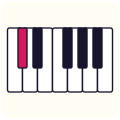
Hide all notes works on names too: name the filled-in key on the piano picture. On a black key the clue says sharp or flat.
Set the count to 3 on Note names for a three-note cell to build a riff from.
Questions and answers
What does the number after the letter mean?
It is the octave, in scientific pitch notation. Middle C is C4, and the number goes up at each C, so the B just under middle C is B3. The number belongs to the letter: B♯3 is the same piano key as C4.
Why do the staff notes include E♯, B♯, C♭ and F♭?
Written music uses them: F♯ major has an E♯ and E♭ minor has a C♭. A sharp raises a note by a semitone and a flat lowers it, and E to F and B to C are already a semitone apart, so E♯ lands on the F key and C♭ on the B key. The 17 note names leave these four out.
Why does it stop at two ledger lines?
Two ledger lines each way gives 17 positions in each clef. Notes further out exist, but once ledger lines stack up, writers usually change clef or mark the passage an octave higher or lower.
AA natural: one of the seven white keys. Guitar in standard tuning: 6th string fret 5 or open 5th string.
A♭Same piano key as G♯. Guitar in standard tuning: 6th string fret 4 or 5th string fret 11.
A♯Same piano key as B♭. Guitar in standard tuning: 6th string fret 6 or 5th string fret 1.
BA natural: one of the seven white keys. Guitar in standard tuning: 6th string fret 7 or 5th string fret 2.
B♭Same piano key as A♯. Guitar in standard tuning: 6th string fret 6 or 5th string fret 1.
CA natural: one of the seven white keys. Guitar in standard tuning: 6th string fret 8 or 5th string fret 3.
C♯Same piano key as D♭. Guitar in standard tuning: 6th string fret 9 or 5th string fret 4.
DA natural: one of the seven white keys. Guitar in standard tuning: 6th string fret 10 or 5th string fret 5.
D♭Same piano key as C♯. Guitar in standard tuning: 6th string fret 9 or 5th string fret 4.
D♯Same piano key as E♭. Guitar in standard tuning: 6th string fret 11 or 5th string fret 6.
EA natural: one of the seven white keys. Guitar in standard tuning: open 6th string or 5th string fret 7.
E♭Same piano key as D♯. Guitar in standard tuning: 6th string fret 11 or 5th string fret 6.
FA natural: one of the seven white keys. Guitar in standard tuning: 6th string fret 1 or 5th string fret 8.
F♯Same piano key as G♭. Guitar in standard tuning: 6th string fret 2 or 5th string fret 9.
GA natural: one of the seven white keys. Guitar in standard tuning: 6th string fret 3 or 5th string fret 10.
G♭Same piano key as F♯. Guitar in standard tuning: 6th string fret 2 or 5th string fret 9.
G♯Same piano key as A♭. Guitar in standard tuning: 6th string fret 4 or 5th string fret 11.
Treble clef 51
A3 in treble clefTreble clef: second ledger line below the staff.
A4 in treble clefTreble clef: second space up.
A5 in treble clefTreble clef: first ledger line above the staff.
A♭3 in treble clefTreble clef: second ledger line below the staff, with a flat. Same piano key as G♯3.
A♭4 in treble clefTreble clef: second space up, with a flat. Same piano key as G♯4.
A♭5 in treble clefTreble clef: first ledger line above the staff, with a flat. Same piano key as G♯5.
A♯3 in treble clefTreble clef: second ledger line below the staff, with a sharp. Same piano key as B♭3.
A♯4 in treble clefTreble clef: second space up, with a sharp. Same piano key as B♭4.
A♯5 in treble clefTreble clef: first ledger line above the staff, with a sharp. Same piano key as B♭5.
B3 in treble clefTreble clef: space under the first ledger line below the staff.
B4 in treble clefTreble clef: middle line.
B5 in treble clefTreble clef: space over the first ledger line above the staff.
B♭3 in treble clefTreble clef: space under the first ledger line below the staff, with a flat. Same piano key as A♯3.
B♭4 in treble clefTreble clef: middle line, with a flat. Same piano key as A♯4.
B♭5 in treble clefTreble clef: space over the first ledger line above the staff, with a flat. Same piano key as A♯5.
B♯3 in treble clefTreble clef: space under the first ledger line below the staff, with a sharp. Same piano key as C4.
B♯4 in treble clefTreble clef: middle line, with a sharp. Same piano key as C5.
B♯5 in treble clefTreble clef: space over the first ledger line above the staff, with a sharp. Same piano key as C6.
C4 in treble clefTreble clef: first ledger line below the staff. This is middle C.
C5 in treble clefTreble clef: third space up.
C6 in treble clefTreble clef: second ledger line above the staff.
C♭4 in treble clefTreble clef: first ledger line below the staff, with a flat. Same piano key as B3.
C♭5 in treble clefTreble clef: third space up, with a flat. Same piano key as B4.
C♭6 in treble clefTreble clef: second ledger line above the staff, with a flat. Same piano key as B5.
C♯4 in treble clefTreble clef: first ledger line below the staff, with a sharp. Same piano key as D♭4.
C♯5 in treble clefTreble clef: third space up, with a sharp. Same piano key as D♭5.
C♯6 in treble clefTreble clef: second ledger line above the staff, with a sharp. Same piano key as D♭6.
D4 in treble clefTreble clef: space just below the staff.
D5 in treble clefTreble clef: fourth line up.
D♭4 in treble clefTreble clef: space just below the staff, with a flat. Same piano key as C♯4.
D♭5 in treble clefTreble clef: fourth line up, with a flat. Same piano key as C♯5.
D♯4 in treble clefTreble clef: space just below the staff, with a sharp. Same piano key as E♭4.
D♯5 in treble clefTreble clef: fourth line up, with a sharp. Same piano key as E♭5.
E4 in treble clefTreble clef: bottom line.
E5 in treble clefTreble clef: top space.
E♭4 in treble clefTreble clef: bottom line, with a flat. Same piano key as D♯4.
E♭5 in treble clefTreble clef: top space, with a flat. Same piano key as D♯5.
E♯4 in treble clefTreble clef: bottom line, with a sharp. Same piano key as F4.
E♯5 in treble clefTreble clef: top space, with a sharp. Same piano key as F5.
F4 in treble clefTreble clef: bottom space.
F5 in treble clefTreble clef: top line.
F♭4 in treble clefTreble clef: bottom space, with a flat. Same piano key as E4.
F♭5 in treble clefTreble clef: top line, with a flat. Same piano key as E5.
F♯4 in treble clefTreble clef: bottom space, with a sharp. Same piano key as G♭4.
F♯5 in treble clefTreble clef: top line, with a sharp. Same piano key as G♭5.
G4 in treble clefTreble clef: second line up. The G clef marks this line.
G5 in treble clefTreble clef: space just above the staff.
G♭4 in treble clefTreble clef: second line up, with a flat. Same piano key as F♯4.
G♭5 in treble clefTreble clef: space just above the staff, with a flat. Same piano key as F♯5.
G♯4 in treble clefTreble clef: second line up, with a sharp. Same piano key as A♭4.
G♯5 in treble clefTreble clef: space just above the staff, with a sharp. Same piano key as A♭5.
Bass clef 51
A2 in bass clefBass clef: bottom space.
A3 in bass clefBass clef: top line.
A♭2 in bass clefBass clef: bottom space, with a flat. Same piano key as G♯2.
A♭3 in bass clefBass clef: top line, with a flat. Same piano key as G♯3.
A♯2 in bass clefBass clef: bottom space, with a sharp. Same piano key as B♭2.
A♯3 in bass clefBass clef: top line, with a sharp. Same piano key as B♭3.
B2 in bass clefBass clef: second line up.
B3 in bass clefBass clef: space just above the staff.
B♭2 in bass clefBass clef: second line up, with a flat. Same piano key as A♯2.
B♭3 in bass clefBass clef: space just above the staff, with a flat. Same piano key as A♯3.
B♯2 in bass clefBass clef: second line up, with a sharp. Same piano key as C3.
B♯3 in bass clefBass clef: space just above the staff, with a sharp. Same piano key as C4.
C2 in bass clefBass clef: second ledger line below the staff.
C3 in bass clefBass clef: second space up.
C4 in bass clefBass clef: first ledger line above the staff. This is middle C.
C♭2 in bass clefBass clef: second ledger line below the staff, with a flat. Same piano key as B1.
C♭3 in bass clefBass clef: second space up, with a flat. Same piano key as B2.
C♭4 in bass clefBass clef: first ledger line above the staff, with a flat. Same piano key as B3.
C♯2 in bass clefBass clef: second ledger line below the staff, with a sharp. Same piano key as D♭2.
C♯3 in bass clefBass clef: second space up, with a sharp. Same piano key as D♭3.
C♯4 in bass clefBass clef: first ledger line above the staff, with a sharp. Same piano key as D♭4.
D2 in bass clefBass clef: space under the first ledger line below the staff.
D3 in bass clefBass clef: middle line.
D4 in bass clefBass clef: space over the first ledger line above the staff.
D♭2 in bass clefBass clef: space under the first ledger line below the staff, with a flat. Same piano key as C♯2.
D♭3 in bass clefBass clef: middle line, with a flat. Same piano key as C♯3.
D♭4 in bass clefBass clef: space over the first ledger line above the staff, with a flat. Same piano key as C♯4.
D♯2 in bass clefBass clef: space under the first ledger line below the staff, with a sharp. Same piano key as E♭2.
D♯3 in bass clefBass clef: middle line, with a sharp. Same piano key as E♭3.
D♯4 in bass clefBass clef: space over the first ledger line above the staff, with a sharp. Same piano key as E♭4.
E2 in bass clefBass clef: first ledger line below the staff.
E3 in bass clefBass clef: third space up.
E4 in bass clefBass clef: second ledger line above the staff.
E♭2 in bass clefBass clef: first ledger line below the staff, with a flat. Same piano key as D♯2.
E♭3 in bass clefBass clef: third space up, with a flat. Same piano key as D♯3.
E♭4 in bass clefBass clef: second ledger line above the staff, with a flat. Same piano key as D♯4.
E♯2 in bass clefBass clef: first ledger line below the staff, with a sharp. Same piano key as F2.
E♯3 in bass clefBass clef: third space up, with a sharp. Same piano key as F3.
E♯4 in bass clefBass clef: second ledger line above the staff, with a sharp. Same piano key as F4.
F2 in bass clefBass clef: space just below the staff.
F3 in bass clefBass clef: fourth line up. The F clef marks this line.
F♭2 in bass clefBass clef: space just below the staff, with a flat. Same piano key as E2.
F♭3 in bass clefBass clef: fourth line up, with a flat. Same piano key as E3.
F♯2 in bass clefBass clef: space just below the staff, with a sharp. Same piano key as G♭2.
F♯3 in bass clefBass clef: fourth line up, with a sharp. Same piano key as G♭3.
G2 in bass clefBass clef: bottom line.
G3 in bass clefBass clef: top space.
G♭2 in bass clefBass clef: bottom line, with a flat. Same piano key as F♯2.
G♭3 in bass clefBass clef: top space, with a flat. Same piano key as F♯3.
G♯2 in bass clefBass clef: bottom line, with a sharp. Same piano key as A♭2.
G♯3 in bass clefBass clef: top space, with a sharp. Same piano key as A♭3.
Alto clef 51
A3 in alto clefAlto clef: second line up.
A4 in alto clefAlto clef: space just above the staff.
A♭3 in alto clefAlto clef: second line up, with a flat. Same piano key as G♯3.
A♭4 in alto clefAlto clef: space just above the staff, with a flat. Same piano key as G♯4.
A♯3 in alto clefAlto clef: second line up, with a sharp. Same piano key as B♭3.
A♯4 in alto clefAlto clef: space just above the staff, with a sharp. Same piano key as B♭4.
B2 in alto clefAlto clef: second ledger line below the staff.
B3 in alto clefAlto clef: second space up.
B4 in alto clefAlto clef: first ledger line above the staff.
B♭2 in alto clefAlto clef: second ledger line below the staff, with a flat. Same piano key as A♯2.
B♭3 in alto clefAlto clef: second space up, with a flat. Same piano key as A♯3.
B♭4 in alto clefAlto clef: first ledger line above the staff, with a flat. Same piano key as A♯4.
B♯2 in alto clefAlto clef: second ledger line below the staff, with a sharp. Same piano key as C3.
B♯3 in alto clefAlto clef: second space up, with a sharp. Same piano key as C4.
B♯4 in alto clefAlto clef: first ledger line above the staff, with a sharp. Same piano key as C5.
C3 in alto clefAlto clef: space under the first ledger line below the staff.
C4 in alto clefAlto clef: middle line. This is middle C.
C5 in alto clefAlto clef: space over the first ledger line above the staff.
C♭3 in alto clefAlto clef: space under the first ledger line below the staff, with a flat. Same piano key as B2.
C♭4 in alto clefAlto clef: middle line, with a flat. Same piano key as B3.
C♭5 in alto clefAlto clef: space over the first ledger line above the staff, with a flat. Same piano key as B4.
C♯3 in alto clefAlto clef: space under the first ledger line below the staff, with a sharp. Same piano key as D♭3.
C♯4 in alto clefAlto clef: middle line, with a sharp. Same piano key as D♭4.
C♯5 in alto clefAlto clef: space over the first ledger line above the staff, with a sharp. Same piano key as D♭5.
D3 in alto clefAlto clef: first ledger line below the staff.
D4 in alto clefAlto clef: third space up.
D5 in alto clefAlto clef: second ledger line above the staff.
D♭3 in alto clefAlto clef: first ledger line below the staff, with a flat. Same piano key as C♯3.
D♭4 in alto clefAlto clef: third space up, with a flat. Same piano key as C♯4.
D♭5 in alto clefAlto clef: second ledger line above the staff, with a flat. Same piano key as C♯5.
D♯3 in alto clefAlto clef: first ledger line below the staff, with a sharp. Same piano key as E♭3.
D♯4 in alto clefAlto clef: third space up, with a sharp. Same piano key as E♭4.
D♯5 in alto clefAlto clef: second ledger line above the staff, with a sharp. Same piano key as E♭5.
E3 in alto clefAlto clef: space just below the staff.
E4 in alto clefAlto clef: fourth line up.
E♭3 in alto clefAlto clef: space just below the staff, with a flat. Same piano key as D♯3.
E♭4 in alto clefAlto clef: fourth line up, with a flat. Same piano key as D♯4.
E♯3 in alto clefAlto clef: space just below the staff, with a sharp. Same piano key as F3.
E♯4 in alto clefAlto clef: fourth line up, with a sharp. Same piano key as F4.
F3 in alto clefAlto clef: bottom line.
F4 in alto clefAlto clef: top space.
F♭3 in alto clefAlto clef: bottom line, with a flat. Same piano key as E3.
F♭4 in alto clefAlto clef: top space, with a flat. Same piano key as E4.
F♯3 in alto clefAlto clef: bottom line, with a sharp. Same piano key as G♭3.
F♯4 in alto clefAlto clef: top space, with a sharp. Same piano key as G♭4.
G3 in alto clefAlto clef: bottom space.
G4 in alto clefAlto clef: top line.
G♭3 in alto clefAlto clef: bottom space, with a flat. Same piano key as F♯3.
G♭4 in alto clefAlto clef: top line, with a flat. Same piano key as F♯4.
G♯3 in alto clefAlto clef: bottom space, with a sharp. Same piano key as A♭3.
G♯4 in alto clefAlto clef: top line, with a sharp. Same piano key as A♭4.
How this list was compiled: A closed set, computed by script and not typed: every staff position from the second ledger line below the staff to the second ledger line above it (17 positions), in treble, bass and alto clef, written as a natural, a sharp and a flat. 17 x 3 x 3 = 153 notes. Nothing is added to pad the list. Checked 2026-09-18: treble clef puts G4 on the second line, bass clef puts F3 on the fourth line and alto clef puts middle C on the third line, against https://en.wikipedia.org/wiki/Clef; lines and spaces are counted from the bottom, against https://en.wikipedia.org/wiki/Staff_(music); middle C is C4, the octave number goes up from B to C and belongs to the letter name, so B♯3 is the pitch of C4 and C♭4 the pitch of B3 in equal temperament, against https://en.wikipedia.org/wiki/Scientific_pitch_notation; middle C sits one ledger line below the treble staff and one ledger line above the bass staff, against https://en.wikipedia.org/wiki/C_(musical_note) (the script asserts that its step counting lands middle C on exactly those two places); what a ledger line is, against https://en.wikipedia.org/wiki/Ledger_line; a sharp and a flat each change a note by a semitone, against https://en.wikipedia.org/wiki/Accidental_(music); two spellings of one pitch, against https://en.wikipedia.org/wiki/Enharmonic_equivalence. 'Same piano key as' names the simplest other spelling: a natural where one exists (E♯4 is F4), otherwise the neighbouring letter's flat or sharp. x.step counts diatonic steps above the bottom line (0 is the bottom line, 8 the top line); x.midi is the MIDI note number with C4 = 60. The staff drawings are our own, drawn by the same script from x.step and saved as one static picture per note under /img/random-note-generator/. Fixer pass 2026-09-19 after review: added the 17 everyday note names (seven naturals, five sharps, five flats) as a group of their own, so the page can hand out a bare note, each with our own drawing of one octave of piano keys with that key filled in (12 drawings, since C♯ and D♭ share a key); the drawings and the piano clues use only the layout checked 2026-09-19 against https://en.wikipedia.org/wiki/Musical_keyboard (seven longer keys for C, D, E, F, G, A, B and five shorter keys named C♯/D♭, D♯/E♭, F♯/G♭, G♯/A♭, A♯/B♭ between them, so none between E and F or between B and C); their guitar frets are computed from standard tuning E2-A2-D3-G3-B3-E4, checked 2026-09-19 against https://en.wikipedia.org/wiki/Guitar_tunings, with one fret to a semitone, checked 2026-09-19 against https://en.wikipedia.org/wiki/Fret (the script asserts E is the open 6th string, A the open 5th, C is fret 8 and fret 3, G is fret 3 and fret 10). The list now holds 170 items: 17 names and 153 staff notes. Licence: own work